

Over the years, I’ve been asked many questions about why I photograph woodland, how I work with weather, light and colour, and what I’ve learned from staying close to home. My answers tend to return to the same idea: the places and experiences that are right for me are also the ones that lead to my most meaningful photographs.
What is it about outdoor photography that inspires you?
I’ve loved the outdoors for as long as I can remember, and all my various interests over the years have involved spending time in nature: early mornings beside a lake for a spot of angling, riding my mountain bike across the North York Moors, kayaking in the North Sea and exploring obscure local woodlands with my camera and my best four-legged friend, Meg.
It’s only in more recent years that I’ve become properly aware of what draws me outside. Much of it comes down to those privileged moments when you experience nature at its very best. Photography is a bonus to simply being there, and having a personal connection with the places I photograph allows me to capture and convey the experiences that I crave.
I’d love to trek for miles and reach towering summits, but the feeling of solitude and wellbeing I find within an atmospheric woodland is very difficult to beat. I’m there because it feels right for me, and the environment that supports me as a person will always be the one in which I can create most honestly.

Why have small local woodlands become so important to you?
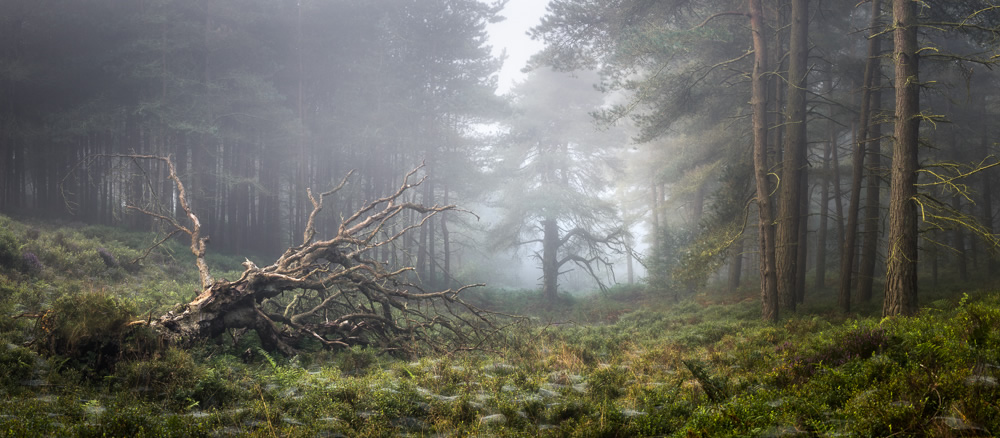
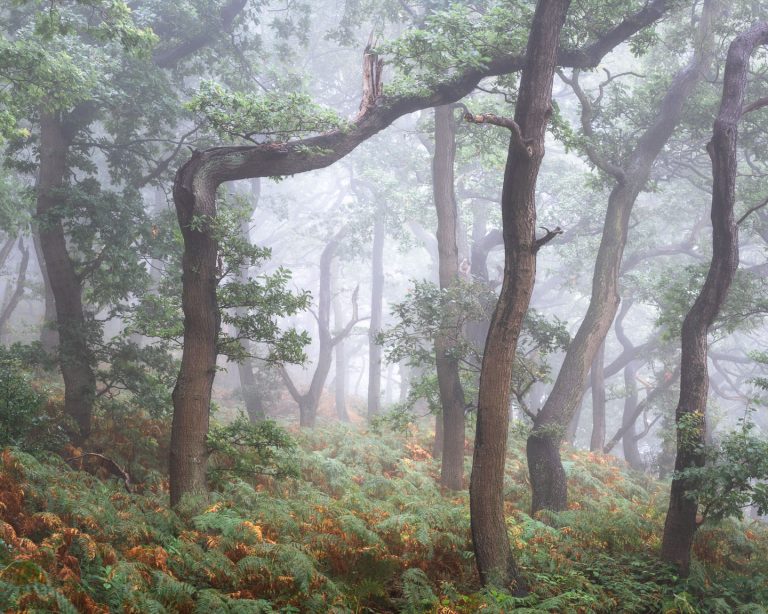
It’s difficult to select a single favourite location because the vast majority of the places I photograph are small, nondescript local woodlands. They may not appear especially promising at first, but they offer little pockets of opportunity if you’re prepared to spend time exploring, observing and absorbing yourself in them.
Chronic pain initially forced me to stay close to home. What began as a physical restriction gradually evolved into an unwavering love of woodland photography and all the challenges it presents. I never expected photographs made in these modest local places to be recognised in competitions or admired by photographers whose work I respect.
The truth is that I enjoy small-scale exploration and discovery every bit as much as creating the final image. The solitude of these self-discovered, complex environments helped me both physically and mentally, while the photographs emerged as a by-product of that relationship.
Simply put, what was right for me was also right for my photography.
Which of your photographs mean the most to you?
This is surprisingly easy to answer because I’m not necessarily looking for the photograph that is technically strongest or most commercially appealing. I think about my relationship with the location, the experience of making the image and the repeated visits that led me towards it.
One of my enduring favourites is a photograph of a dead oak tree titled Afraid of Time. I connected with the tree so strongly that it became the basis of my logo and embossing stamp. It was a rare and unique discovery in a place where I still feel genuinely nervous—the dense plantation, deep silence and darkness give it a slightly unsettling atmosphere.
I continued returning because I felt there was another photograph to be made. After 22 months, I created Afraid of Time II. It didn’t replace the original; it became another chapter in my relationship with the tree and the surrounding woodland. That prolonged process of discovery is a large part of what makes both photographs meaningful to me.

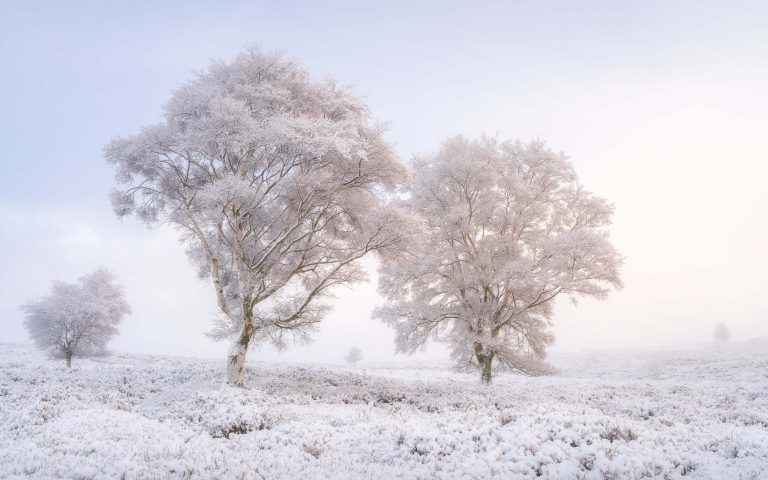
Other photographs—including The Dysfunctional Family, Frosted Rowan, Distant Dale, Nature’s Claim and Valley Stories III—remain important because they represent different stages of my photographic journey. They are all rooted in local places that I came to understand through repeated visits.
A favourite made farther afield is Guardians of the Forest. I noticed the composition while visiting Wales and returned the following morning when terrific conditions transformed the scene.
What kinds of weather work best for your photography?
It depends entirely upon your style, subject and what you enjoy, so I can only speak for myself. I often find obvious sunlight overrated for the photographs I want to make. Subtle light on the bleakest of days can reveal colour, texture and atmosphere far more effectively.
Rain is frequently underrated, perhaps because it can be difficult to work in, but it can do wonderful things for colour, light and mood. Mist, heavy fog, frost, snow and even horizontal blizzards can all help communicate something about the experience of being in a place.
The important thing is to find weather that supports the subject and the story you’re trying to tell. If I can really feel the conditions, I enjoy trying to translate that sensation into a photograph.
How do light and colour influence the way you make an image?
Photographers often talk about exposing to the right to retain the maximum amount of information in a file. That is sometimes appropriate, but many of my photographs are exposed further to the left because a darker exposure more accurately reflects the colour, atmosphere and emotion of the scene.
There are no rigid rules. I respond to the conditions, the subject and how the place feels at the time.
Colour is an essential part of my experience within the landscape. My portfolio remains overwhelmingly colour-based because I enjoy trying to bring colour, light and form into balance. I often work beneath soft light, which allows subtle colours and fine details to emerge without being overwhelmed by contrast.

I try to establish an appropriate white balance in the camera so the file already reflects how the scene appeared to my eyes. The process feels satisfyingly complete when the photograph becomes a print, so I use a calibrated monitor, suitable paper profiles and a fine-art paper that complements the character and tone of the image.
What advice would you give to photographers trying to find their own direction?
My approach won’t suit everyone. It requires patience, perseverance, passion and a certain degree of stubbornness, but it works for me and for the circumstances in which I found myself.
I would encourage photographers to explore different forms of landscape photography and discover the subjects and locations with which they can genuinely connect. Try not to make photographs according to what you think other people will admire. Photograph for yourself, remain true to your interests and maintain integrity in your work.
If you make photographs that you find personally fulfilling, you’ll always have meaningful experiences and stories worth telling—even when the resulting images never receive wider recognition.
What did recognition in Outdoor Photographer of the Year mean to you?
In 2017, Valley Stories III won its category in Outdoor Photographer of the Year. The recognition genuinely surprised and excited me, but it also made me rather nervous.
Only a few years earlier, I had been wandering around my local countryside in constant pain, often unhappy and unsure whether what I was doing photographically was “right”. Having an image from one of my favourite local woodland locations recognised in such a significant competition felt deeply reassuring.
Competition success isn’t why I make photographs, but the experience confirmed something important: I didn’t need to travel to grand landscapes or follow somebody else’s approach. The quiet places that helped me physically and emotionally were also capable of producing my most personal work.
If that recognition encourages someone else to look more closely at the landscape near home—or encourages another person living with chronic pain to discover whether outdoor photography might help them—then it means considerably more than the award itself.