


No matter how challenging or positive a year has been, I always find value in reflecting on my photography. I want to see progression in my work and fulfilment in the creative process, but also to understand why certain things went well and what might have been better.
When I originally sat down to consider 2020, I felt awkward about how to express my experience. It had been an emotional rollercoaster for reasons that were both widely shared and deeply personal. The pandemic disrupted lives, separated people and created enormous uncertainty. It also changed our relationship with time, work and the places immediately around us.
Looking back, what stands out photographically is how those restrictions deepened my appreciation of local woodland. They encouraged me to look more closely, recognise changes in my own work and strengthen a relationship with the places and trees that had already shaped my photography.
Before everything changed
In February 2020, I stood on a Scottish mountainside with four workshop clients during a fantastic wintry storm. The cold, wet and snow striking the lens felt inconsequential as we revelled in the atmosphere and the shared experience of photography.
That morning resulted in one of my favourite photographs of the year, Caledonia. It also became a particularly clear memory of the last time life felt relatively unconstrained.

We were fortunate enough to move house shortly after returning from Scotland. Then, as Covid-19 took hold, everything began to close down. Workshops were cancelled, projects were postponed and the financial uncertainty was considerable.
Photography is my livelihood, but it is also one of the ways I make sense of the world. With the professional side of it suddenly curtailed, I found myself thinking more carefully about what happiness and fulfilment in photography actually meant.
A changing photographic language
The enforced pause gave me more time to assess my work—to study the photographs that had been successful and recognise patterns in how my interpretation of woodland was evolving.
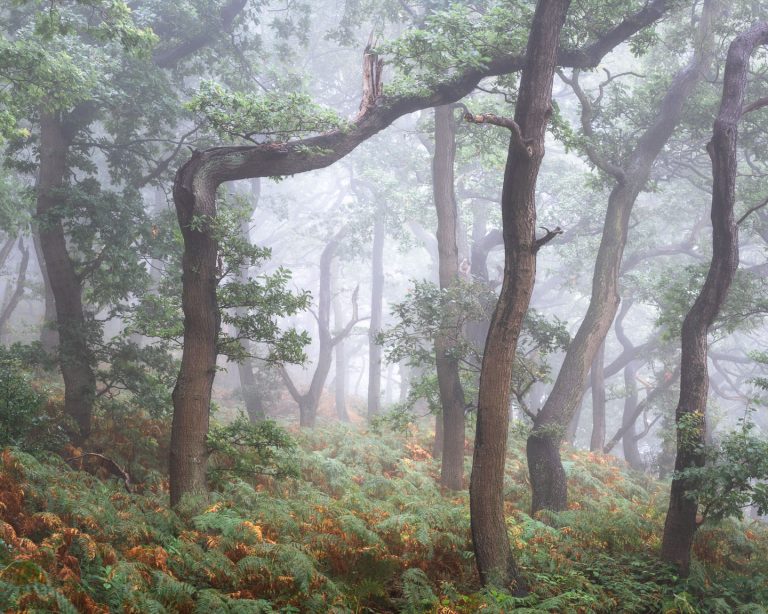
I could see that I was gravitating towards increasingly complex scenes, using shape, gesture and rhythm to find harmony within apparent chaos. Metaphors and anthropomorphism continued to play an important role in how I saw woodland and the characters within it.
I began exploring some of those ideas in A Poetic Approach to Woodland Photography. Rather than treating composition purely as an exercise in arranging visual elements, I was becoming more interested in relationships: how trees appeared to communicate, compete, support or recoil from one another.

Arguments became one of my favourite photographs from the beginning of the year. The gestures and relationships suggested confrontation, bringing together complexity, character and the kind of visual storytelling that increasingly interested me.
Looking closer to home
The restrictions of the pandemic made many of us more acutely aware of the value of time outdoors. Photography for wellbeing felt more important than ever, and the freedom to spend time with a camera could no longer be taken for granted.
When restrictions eased and I could return to the woods, I felt a strengthened love and respect for nature. That feeling influenced the photographs I made during spring.
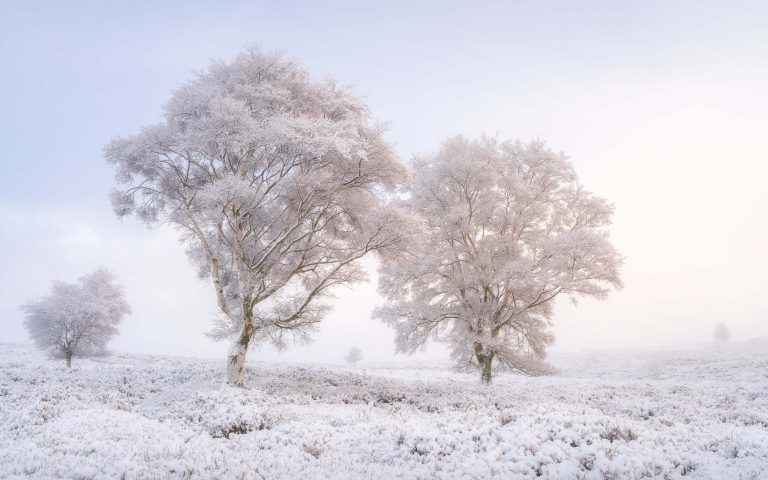
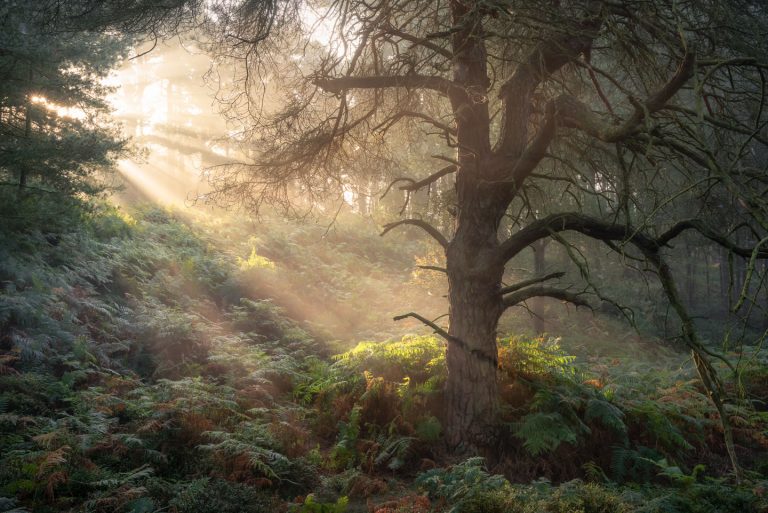
I found myself responding to the positive vibrancy of woodland, dynamic shapes and soft ambient light. Mist and fog had long been closely associated with my work, but I became less dependent upon dramatic atmosphere. Whatever the conditions, I appreciated the simple act of being present.


The pandemic also changed the relationship many people had with their local countryside. It was heartening to see children discovering nature and adults placing greater value on their contact with it. Less encouraging was the accompanying increase in litter, pressure and occasional damage within popular places.
I often responded by seeking the quietest woodlands at the most unsociable hours. Solitude in places that still felt wild became especially precious, strengthening something that had always been central to my work.
Other photographers were also discovering—or rediscovering—the enjoyment of working locally. Some understandably longed to return to mountains and grander landscapes, but I revelled in the opportunity to deepen my relationship with the trees and woodlands that had shaped both my photography and my view of the world.


A deeper relationship with familiar places
Although circumstances forced me to remain closer to home, local woodland never felt like a consolation prize. It offered limitless complexity and the opportunity to build a relationship through repeated visits.
Familiarity allowed me to notice subtle changes in light, growth, colour and structure. More importantly, it encouraged me to understand the character of individual trees and the relationships that existed between them.
In terms of using photography to communicate my appreciation for places I had been visiting for many years, 2020 was filled with positives.

The year also strengthened my interest in rhythm and repetition. The challenge was not to simplify woodland by excluding its natural complexity, but to find a visual order that allowed complexity to remain an essential part of the photograph.


Woodland, grief and wellbeing
Photography during 2020 wasn’t solely about creative progression. Alongside the upheaval shared by so many people, there were private difficulties and periods of grief.
Woodland gave me somewhere to process emotions that were difficult to articulate. The familiar ritual of walking, observing and making photographs provided a sense of continuity when other parts of life felt uncertain.

The therapeutic value of photography isn’t dependent upon making a successful image. There is value in the process itself: leaving distractions behind, walking without urgency and allowing one’s attention to settle upon the natural world.
Sometimes it is enough simply to be there and immersed.


What the year left behind
I hope that the increased popularity of woodland photography during this period developed into something more lasting: a greater understanding of woodland and a desire to protect and regenerate it.
Making photographs can be an invitation to learn about our subjects. That understanding creates empathy, and empathy changes how we behave in the landscape as well as how we represent it through our work.
The year reinforced my commitment to the local woodlands I knew well and to the visions I was still working towards within them. My never-ending effort to improve my composition continued, as did my desire to explore new locations and embrace unfamiliar creative challenges.
Most of all, 2020 reminded me that local photography is not a compromise. By devoting time and attention to places close to home, I deepened my relationship with them and made some of the most personally meaningful photographs of my year.
None of that diminished the losses, restrictions or financial strain. It simply gave the year a thread of continuity and something positive upon which to build.
Films from 2020
These films record some of the places, ideas and experiences that shaped my photography during the year:
- Spring Woodland Photography on Location
- A Tribute to a Special Location
- The Photographer’s Story
- The Joys and Hazards of Photography
- A Poetic Approach to Woodland Photography
Many thanks for reading and for the support I received during such a challenging year.