


I think it’s fair to say that I burden myself with what is sometimes an unhealthy amount of self-analysis. Although I’ve never considered myself an extrovert, I hadn’t particularly labelled myself as an introvert either.
I began to think about this differently in 2017, when I chatted to photographer and filmmaker Sean Tucker about making a video together.
I’d been enjoying Sean’s philosophical and thought-provoking films for several months, so it was good to discover that he also enjoyed my videos, photography and, of course, the relentlessly bouncy Meg. We began chatting online, sharing stories and discussing a possible collaboration. My instinct told me we’d be a good fit.
When Sean travelled from London to join me in North Yorkshire, he already had an intriguing theme in mind: being an introvert in photography.
He had assumed that I was an introvert too. My initial reaction contained a slight element of surprise, but the more I thought about it, the more obvious it became. Of course I’m an introverted photographer—or, at the very least, introverted and deeply introspective in the way I approach woodland photography.
Finding my own bubble
I’m a bit of a sensitive soul and like to consider myself emotionally connected. That may not sound very macho, but I don’t profess to be.
That emotional connection has certainly felt more pronounced since I began living with chronic pain in 2012. When I’m presented with a question that makes me examine my personality, behaviour or motivations, I tend to think about it deeply and give it time to brew like a proppa Yorkshire cuppa.
I gradually became more consciously aware of just how introverted I am when making my own work.
Even if I venture out with another photographer, I have a tendency to disappear and find my own bubble of nature and solitude. Looking back at my films and photographs, it’s clear how much my work is shaped by where I go, how I observe, what I feel and the peculiar mixture of thoughts that sometimes find their way into an image.
Take away those emotional and solitary elements and I’ll probably give up and go home.
Sean spoke about observation, self-awareness and introspection as some of the strengths associated with introversion. Those three qualities certainly resonate with me, and they play an important role in deciding where I photograph, how I respond to a scene and what I hope to communicate through it.
An emotional connection with the landscape isn’t something that can be reduced to a formula, a set of guidelines or a secret technique. It develops through experience, familiarity and the time we’re prepared to give a place.
The photographs that mean the most
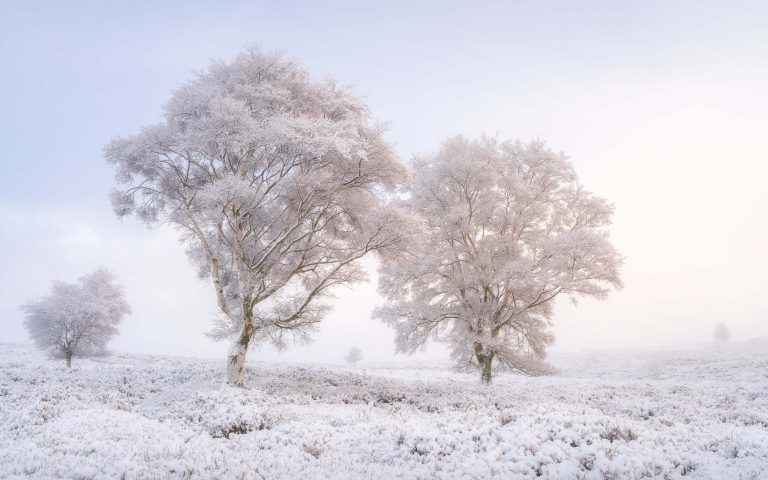
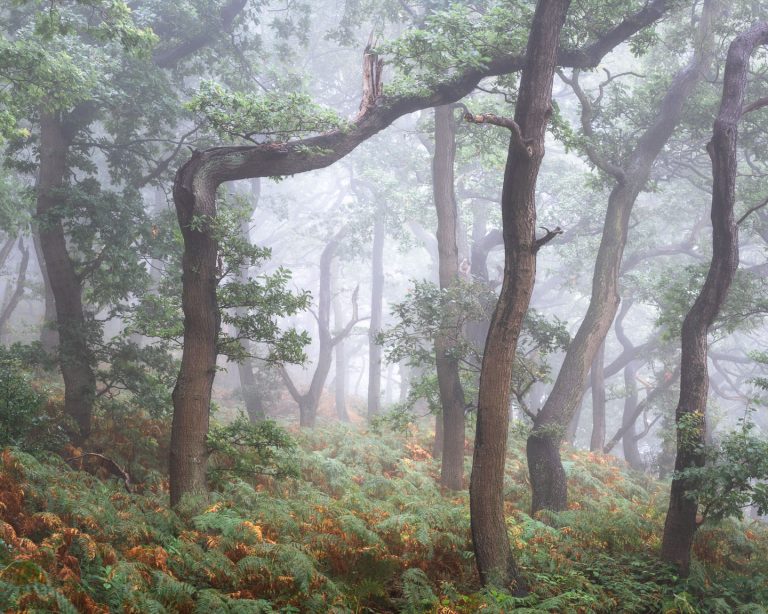
People sometimes ask me where they can find a particular tree or woodland they’ve seen in one of my photographs, but I’m usually rather secretive.
That isn’t through selfishness. It’s because I believe the most rewarding photographs aren’t necessarily those that win competitions or attract the greatest attention. They’re the ones that capture the essence of why we love photography, the outdoors and the subjects we choose to photograph.
If there is somewhere that means more to you than simply providing a pleasant view—somewhere you would happily spend time without a camera—then that is surely one of the best places in which to be creative and share something of yourself through your images.
Your most important photographs are the ones that stir emotions in you.
Solitude gives me the space to recognise those emotions and understand why I’m drawn to a particular tree, gesture or arrangement of forms. It allows the woodland to slowly reveal itself without the distraction of conversation, expectation or the pressure to produce something.
That doesn’t mean I always understand what I’m responding to in the moment. Often, the meaning becomes clearer after repeated visits or when I live with a photograph for a while. Introspection can undoubtedly become excessive, but it can also help us recognise the instincts and experiences that make our work personal.
Making space to think
In his film, Sean also talks about creating headspace by listening to music that helps him reflect and relax.
I can certainly relate to that. I often listen to film scores while taking my regular walk to the supermarket. I find myself imagining elusive moments in the landscape, scenes I’ve witnessed or hope to witness, sequences I’d like to film and memories I never want to forget.
It’s a slightly bizarre experience to feel emotional while picking up a punnet of plums.
Those moments away from the camera are still part of the creative process. They give thoughts and ideas somewhere to settle, without demanding an immediate outcome.
Looking back, Sean’s assumption didn’t give me a new label so much as a better understanding of something that was already there. I don’t regard introversion as a limitation to overcome. It is simply part of how I experience woodland and how I make photographs.
None of this means that meaningful photography belongs only to introverts. The important thing is to recognise the circumstances in which you feel most yourself.
In my case, what is right for me emotionally—quiet, time, familiarity and space to observe—has invariably been right for my photography too.
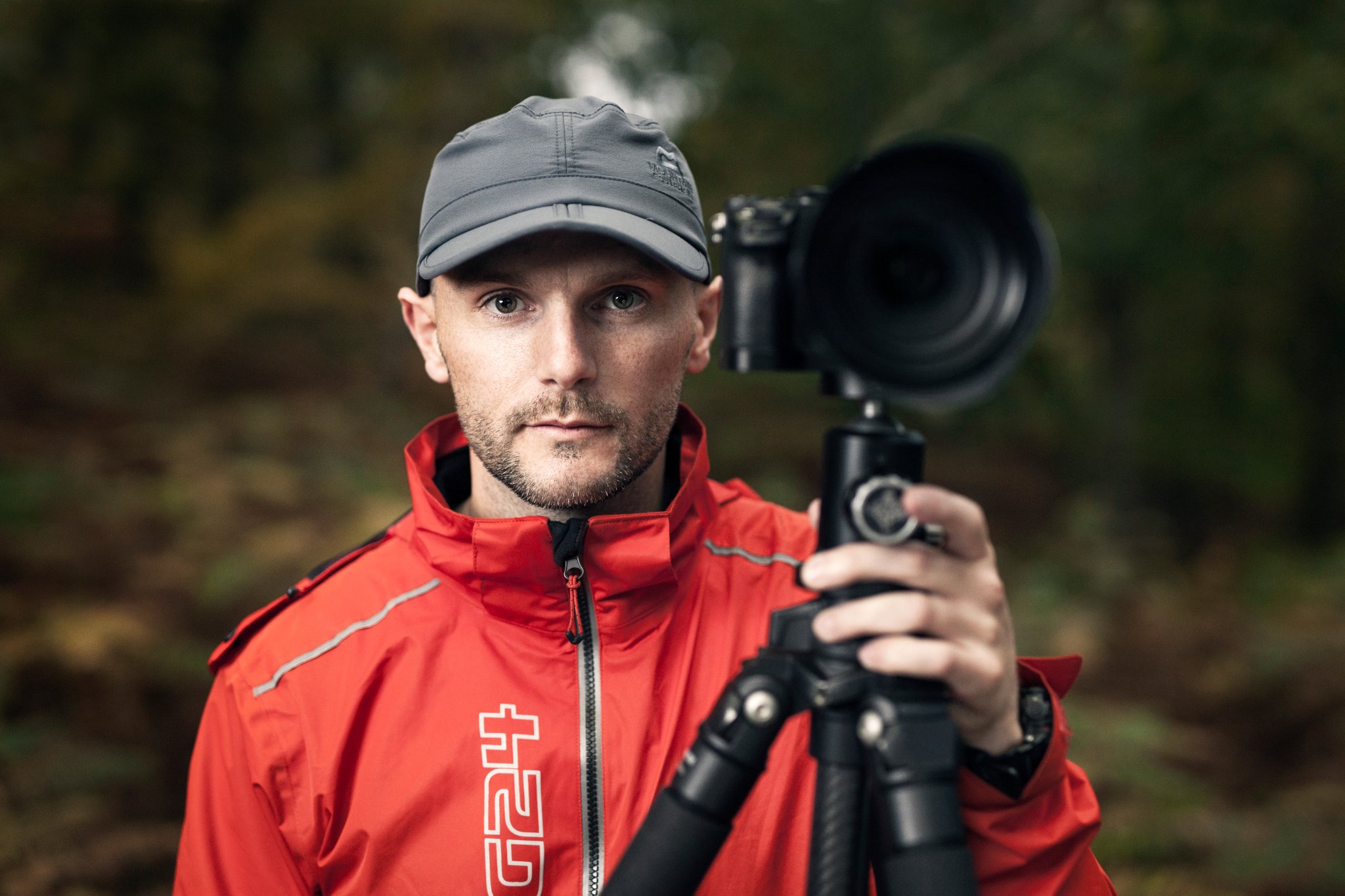
Finally, a huge thanks to Sean for kindly taking some awesome new profile photos for me.
Sean Tucker’s YouTube channel: https://www.youtube.com/user/seantuckermerge